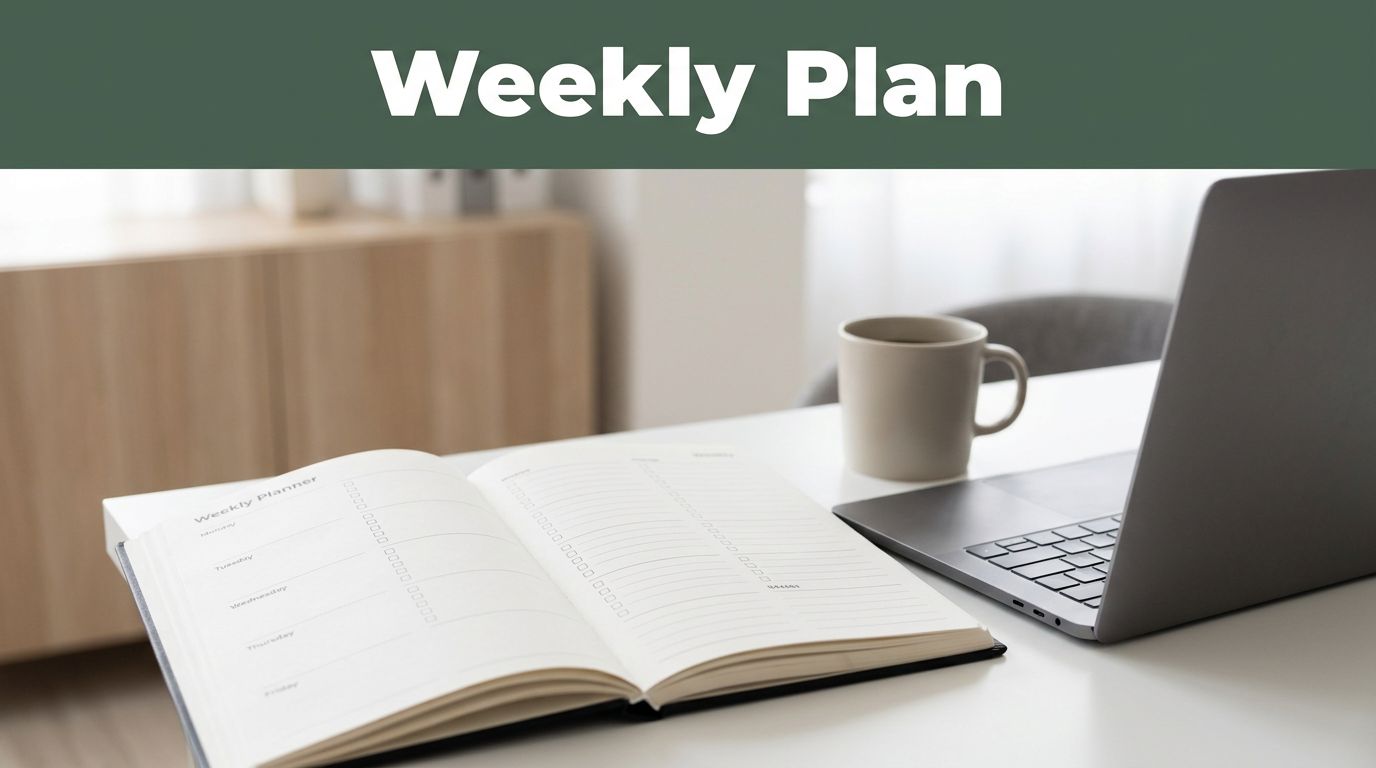
Picture this. It’s Wednesday afternoon. Your inbox overflows. Meetings stack up. You feel scattered and behind. That familiar stress hits because you lack a clear path forward.
A solid weekly plan fixes that. It gives control. You spot priorities early. Productivity rises. Burnout drops. No more reacting to chaos.
This guide draws from 2026 best practices. You’ll learn to review your last week. Pick top priorities. Build tasks and time blocks. Add habits for balance. Embrace trends like flexibility. Follow these steps for steady wins.
Start Strong by Reviewing Your Last Week
Sunday evening works best. Spend 10-15 minutes. Look back at the past week. Note what went well. Ask what blocked you. Decide what carries over. This sets a realistic tone. You avoid repeat mistakes.
For example, you finished a key report. Great. But gym sessions slipped. Why? Tired after late calls. Adjust now.
This review ties to bigger goals. It builds awareness. You learn patterns over time.

Link Wins to Your Long-Term Goals
Spot your successes first. Did family dinners happen? Note it. That supports work-life balance. Your yearly aim might be stronger relationships. Build on this weekly.
Connect dots. If client calls boosted revenue, schedule more. Patterns emerge. Weekly actions fuel annual progress. For instance, consistent reading advanced your skills last month. Keep that momentum.
In short, celebrate small wins. They compound. This keeps you motivated.
Spot and Fix Roadblocks Early
Distractions pop up. Social media ate hours. Overloaded days caused skips. List them.
Then adjust. Cut low-value tasks. Prioritize sleep first, seven to eight hours nightly. Realism matters. For details on quick reviews, check this weekly planning guide.
You prevent overload. Next week starts smoother.
Pick Your Top Priorities to Stay Focused
Limit to two to five tasks. High-impact only. Link them to goals. This prevents overload.
Ideas like “Focus 3” help. Pick three big items. Or “5 Before 11,” five tasks by noon. Examples include a deadline project. A key client call. Personal learning session.
Place them first each day. Momentum builds. You finish strong.

Make Them Actionable and Measurable
Vague goals fail. Break them down. “Write 1,000 words on report” beats “Work on report.”
Add outcomes. “Call client, secure meeting” works. Measure success. Did revenue grow? Skills improve?
Specific steps create clarity. You track progress easily. Results follow.
Build Your Daily Tasks and Time Blocks
Spread tasks across days. Use a calendar view. Add time blocks for work. Include breaks and meals.
Leave gaps. Surprises happen. Tools like planners with weekly spreads fit best. Drag tasks to match life.
2026 trends favor time boxing. Set fixed slots for deep work.

Theme Your Days for Better Flow
Group similar work. Admin on Monday. Creative tasks Tuesday. This cuts switch costs.
Routines form. Energy stays high. For example, emails first. Then focused projects.
Flow improves. Days feel purposeful.
Block Time Realistically Around Your Life
Factor in commute. Sleep seven to eight hours. Chores too. Use one-to-two-hour blocks max.
Columns per day help. Meals at set times. Buffers prevent stress.
Life fits work. Balance holds.
Add Habits, Health, and Fun for Full Balance
Schedule routines. Exercise three times. Meals at fixed hours. Sleep consistent.
Cover life areas. Work, family, finances like bill checks. Well-being with walks. Fun outings.
Set intentions. “Feel calm and strong.” Track for consistency. Flexibility rules.

Cover All Life Areas Without Skipping
Health first. Gym, meals. Relationships next, date nights. Money checks. Growth reading.
Slot around events. Birthdays count. No skips.
Full coverage sustains you.
Track Habits to Build Lasting Routines
Use simple charts. Stars for done days. Consistency beats perfection.
Planners with trackers shine. Habits stack, like plan after breakfast.
Routines stick.
Boost It with 2026 Trends and Flexibility
Add 90-day sprints. Break quarterly goals weekly. Avoid burnout.
Planners trend vertical layouts. Habit charts included. Journal space too. For top picks, see best paper planners for 2026.
Buffer time helps. Adjust weekly. Plan Sundays or Mondays.

Try 90-Day Sprints for Steady Wins
Set one big objective. Three key results. Weekly steps follow.
Urgency builds. For a guide, read this 90-day sprint method.
Wins accumulate. Goals hit.
A strong weekly plan reviews the past. It picks priorities. Builds blocks. Adds balance. Uses 2026 trends.
Start simple. Grab a planner. Review this Sunday. Share your wins below.
You gain control. Productivity soars. Life balances. Make it a habit now.