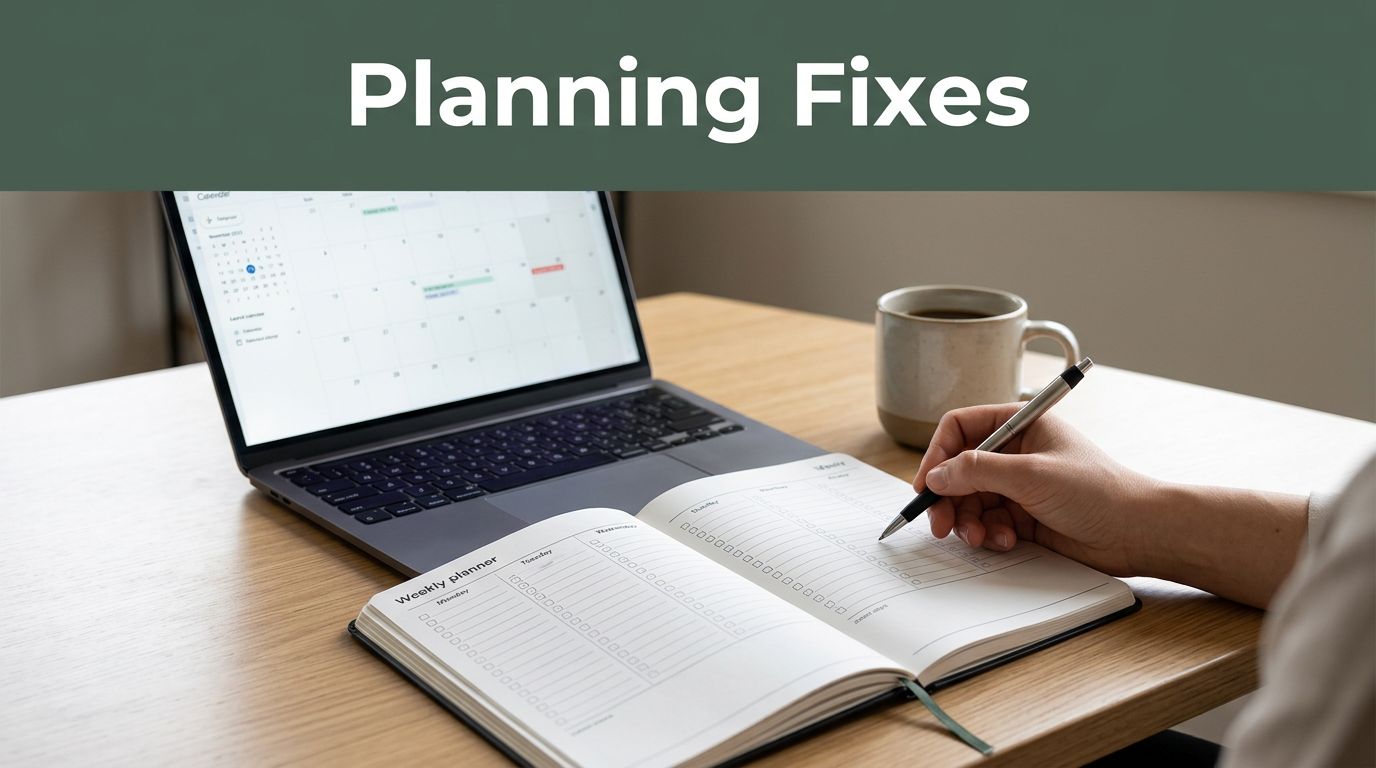
Have you ever finished a week feeling exhausted but no closer to your goals? You worked hard, yet key tasks slipped away. Weekly planning promises focus and progress, but common mistakes turn it into stress.
Many people fall into setup errors, overplanning traps, and consistency slips. Productivity experts in 2026 highlight these pitfalls from real user data. They cause repeated failures and burnout.
You can fix them with simple tweaks. Let’s break down the top issues and quick solutions so your weeks feel productive.
Starting Wrong: Setup Mistakes That Doom Your Week
Poor setup at the start sets a weak foundation. Tasks scatter, and motivation fades fast. People often rush into lists without structure. As a result, weeks end in frustration.

Not Setting Clear Goals
You jot down random tasks like “work on project” or “emails.” Without purpose, your week feels busy but pointless. Motivation drops because nothing ties to bigger aims.
This happens because ambition pushes vague ideas. Yet, you end up spinning wheels. Low energy follows unfinished efforts.
Pick 3-5 specific, measurable goals instead. For example, say “Finish project report by Wednesday noon.” Tie them to life priorities, like career growth. This adds drive. Experts note clear goals boost completion by 40%.
In short, start with purpose. Your week gains direction right away.
Skipping Your Weekly Review
You dive into a new plan without glancing back. Old errors repeat, like why that task failed last time. Bad habits stick around.
Busy schedules make this common. However, no reflection means stalled progress. You feel stuck in loops.
Block 10-15 minutes Sunday night. Note wins, flops, and adjustments. Ask: What worked? What blocked me? For more on this ritual, check high performers’ weekly review guide. It feels quick and builds wins.
After all, reflection turns experience into better plans.
Overlooking Fixed Commitments
Meetings and deadlines get buried under new ideas. Your schedule collapses when they clash. Everything else shifts or drops.
You focus on fresh tasks first. That’s why non-negotiables hide. Chaos follows.
List them at the top. Build tasks around them. For instance, slot a 2 PM call, then fit work blocks. This creates a solid base. Surprises won’t derail you.
Most importantly, fixed items anchor your week.
Overloading Your Plan: How Too Much Stuff Leads to Burnout
Too many tasks overwhelm even the best intentions. You aim high but crash into reality. Burnout creeps in from constant pressure.
Experts call this overpacking. Schedules ignore real life. Guilt builds from unfinished lists.
Cramming Too Many Tasks
Endless items fill your planner. You can’t finish them all. Guilt hits hard by Friday.
Ambition drives this, but unchecked it hurts. Context switching wastes time; refocus takes 23 minutes each time.
Prioritize with the Eisenhower Matrix. Sort urgent versus important. Do key items first, delay or drop others. See Asana’s Eisenhower Matrix guide for steps. Focus sharpens output.
As a result, you finish what counts.
Using Your Planner as a Task Dump
Your planner turns chaotic, like a brain dump. No big picture or balance. Rest and fun vanish.
Daily fires push this habit. Work dominates. Burnout follows fast.
Time-block your days instead. Assign slots for tasks, breaks, and self-care. Include dinner or walks. Learn time blocking techniques for 2026. Design weeks intentionally.
This makes planning holistic and sustainable.
Overdetailing Every Session
You rewrite routines weekly, like workouts or emails. Perfectionism wastes hours. Freshness fades into tedium.
Details feel safe at first. Yet, repetition drains energy.
Cap at 3-5 main goals per day. Reference a notes page for repeats. Save time and stay sharp.
Besides, simplicity keeps momentum.
Losing Steam: Habits That Kill Your Planning Consistency
Consistency fades without care. Plans gather dust. Progress halts until you restart.
Life pulls you away. Yet, small slips compound into chaos.
Sticking to Rigid Plans Without Adjustments
You set long-term schedules but ignore shifts. A sick day or deadline change breaks it all. You abandon the plan.
Far-ahead thinking causes this. Reality doesn’t match. Failure feels total.
Tweak weekly. Leave buffer space, like 20% open time. Adjust for surprises. Plans stay realistic.
In other words, flexibility fuels success.
Dropping Planning for Days or Weeks
Busy stretches stop your routine. Restart feels overwhelming. Chaos returns.
Stress or travel triggers this. Habits break easily.
Do 5-minute daily check-ins. Keep your planner visible, like bedside. Short sessions build unbreakable flow.
Finally, small actions prevent big drops.
Weeks transform when you dodge these traps. Setup right, load smart, and stay consistent. Pick one or two fixes this week for quick wins.
Audit your planner now. Spot your biggest slip. Share it in the comments below. Subscribe for more tips. Ditch pitfalls, and enjoy productive, calm weeks ahead.