Ever end a week wondering where the time went? You chase tasks, miss family moments, and feel that nagging pull of unfinished goals. Sundays hit hard with that mix of dread and reset energy.
Weekly planning fixes this. You set aside 20 to 30 minutes, often Sunday night or Monday morning. Grab a notebook or app. List your top goals, key tasks, and fixed events. Fit them into a simple one- or two-page view of the week ahead.
This habit brings weekly planning benefits like sharper focus, less stress, and real progress. You spot patterns, balance work with life, and end weeks proud. Tired of reactive days? This post covers what weekly planning means, why it boosts productivity and calm, step-by-step how-to, fresh 2026 tools, common traps, and your next move.
What Weekly Planning Really Means and How It Fits Your Life
Weekly planning creates a clear snapshot of your week. You map priorities, tasks, and events in one spot. This bridges big yearly aims to daily actions. No more guessing what comes next.
Pick a quiet time each week. Use paper, a planner, or an app. Start with fixed events like meetings or kids’ soccer. Add goals broken into small steps. For example, a working parent blocks 9 a.m. team calls Monday through Friday. They slot family dinner Tuesdays and gym time Thursdays. Habits like reading fill gaps.
This fits anyone. Busy pros use it for projects and deadlines. Parents juggle school runs and meals. Students track classes and study blocks. It stays flexible, so you adjust as life shifts.
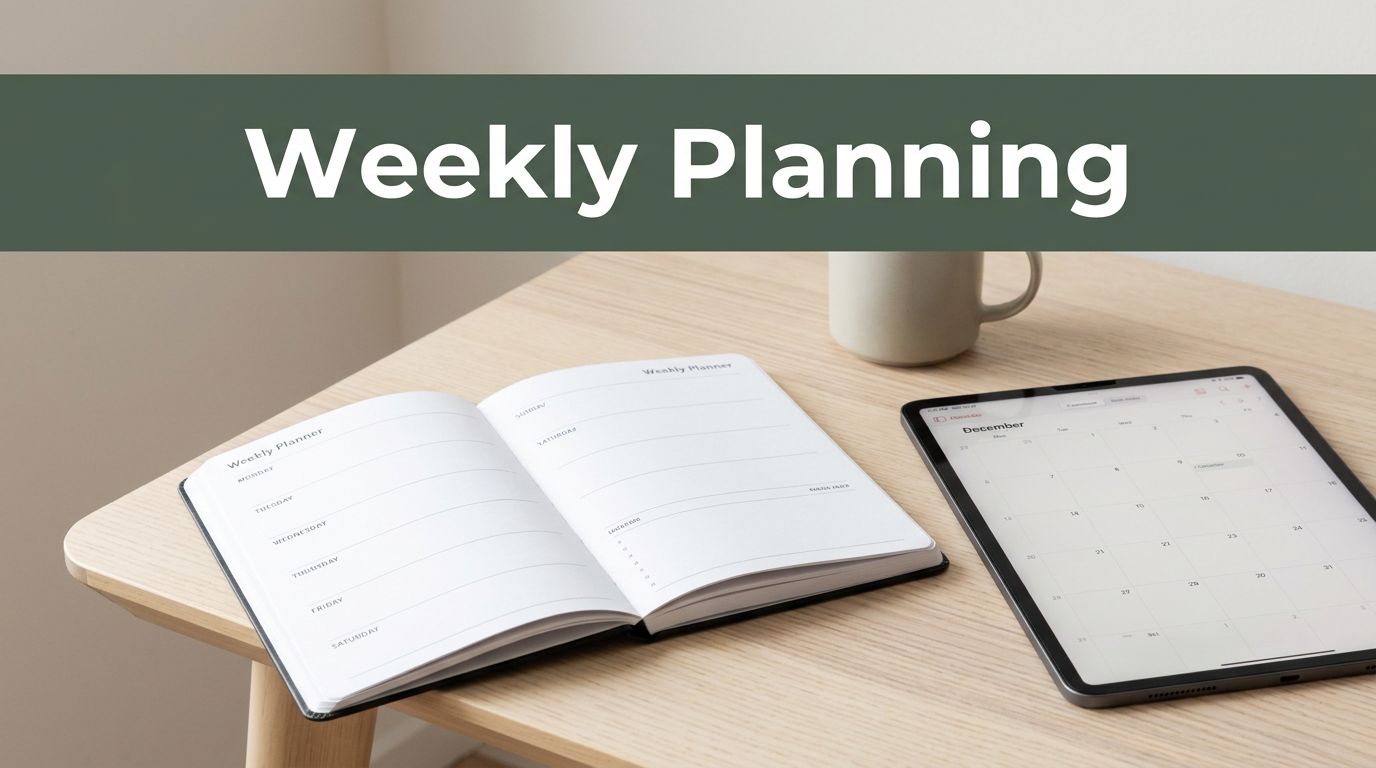
See a simple example below. It shows days laid out with tasks and blocks. This view fights overwhelm because everything fits on one page.

In short, weekly planning turns chaos into control. You see the full picture. Then you act with purpose.
Why Weekly Planning Transforms Your Productivity and Peace of Mind
Weekly planning shifts you from reaction to intention. It boosts output and cuts mental load. Recent trends show folks gain calm and wins from this habit. For instance, employees report better focus after short planning sessions.
You prioritize what counts. Stress drops because your brain unloads. Balance improves across work, health, and home. Habits stick, and goals move forward. Let’s break it down.
Prioritize Tasks and Tackle What Matters Most
Spot your top three must-dos each day. Use the Rule of 3: pick three key items per day or week. This fights distractions like endless emails.
A project manager swaps inbox time for client calls. They finish big work first. As a result, productivity jumps. You end days with wins, not regrets.
Dump Your Brain to Slash Stress and Overwhelm
Start with a brain dump. Write every idea, worry, or task. Then sort them into musts, shoulds, and later.
This clears mental clutter. Anxiety fades because nothing hides. One user turned a 20-item chaos list into a tidy week. Calm follows.
Hit Goals in Health, Work, and Family Life
Break monthly goals into weekly bites. Track habits like walks or reading. Schedule family time and career steps.
Reflection spots wins. You align days to dreams. Balance grows, so work doesn’t eat weekends. Progress feels steady.
Check 11 benefits of planning your week as an employee for more proof. It matches what busy teams see.
Your Easy Step-by-Step Guide to Building a Weekly Plan
Ready to start? Follow these steps. They take 20 minutes. Tailor for your life, like family schedules or pro lists.
- Gather your tools. Pick a planner or blank page. Note your calendar and to-do apps.
- List fixed events first. Slot meetings, appointments, and repeats. Build around them.
- Do a full brain dump. Jot every task or idea. No filter yet.
- Prioritize ruthlessly. Pick top three to five per day. Use impact: what moves goals?
- Time block focus hours. Assign slots for deep work. Add buffers for life.
- Include habits and notes. Add exercise, meals, or quick wins. Note energy levels.
- Review and carry over. At week’s end, check wins. Move undone items forward.
This builds momentum. Beginners, focus on one habit weekly.

Kick Off with a Full Brain Dump and Fixed Events
Write it all down first. Then fit tasks around soccer or calls. This avoids overload.
Block Time and Break Goals into Doable Steps
Guard focus blocks. Split aims like “launch report” into calls and drafts. Rule of 3 keeps it simple.
Reflect, Adjust, and Carry Forward Wins
Note what worked. Shift leftovers. Check monthly view. You improve each time.
See a full 7-step weekly planning guide for extra tips.
Fresh 2026 Tools and Trends to Make Planning Effortless
In April 2026, trends favor simple prints and PDFs. Fight inertia with momentum sheets. Build on strengths via workshops. Big-print layouts help all ages.
Popular picks mix paper and downloads. Undated options give flexibility. Hybrid views blend monthly and weekly.
Here’s a quick look at standouts:
| Tool | Type | Key Features | Best For |
|---|---|---|---|
| Momentum Planners | PDF download | Weekly sheets, dated for 2026, goal ties | Pros beating ruts |
| See It Bigger | Paper | Big print, hourly slots, tabs | Space for schedules |
| JetPens selections | Paper | Various layouts, undated flex | Custom weekly spreads |
These lay flat and track habits. Paper beats apps for focus now. Check best planners for 2026 for layouts.

Pick what fits. Start free with Momentum packs.
Steer Clear of These Sneaky Weekly Planning Traps
Overload kills plans. You list 20 tasks, finish none. Fix it: cap at top five weekly.
Ignore fixed events next. Tasks clash with meetings. Plan around them first.
Skip reflection often. Weeks repeat mistakes. Always note wins and tweaks Sunday.
Drop carryovers too. Unfinished items vanish. Move them forward clearly.
Avoid these, and you save time. Plans stick. See common mistakes in weekly planning for fixes.
Weekly planning means a quick weekly map of goals and tasks. It cuts stress, sharpens focus, and balances life. You gain productivity and peace.
Grab a notebook this Sunday. Spend 15 minutes on a brain dump. Track one week. Notice the shift to calm control.
What holds you back from weekly planning? Try it, then share your wins below.